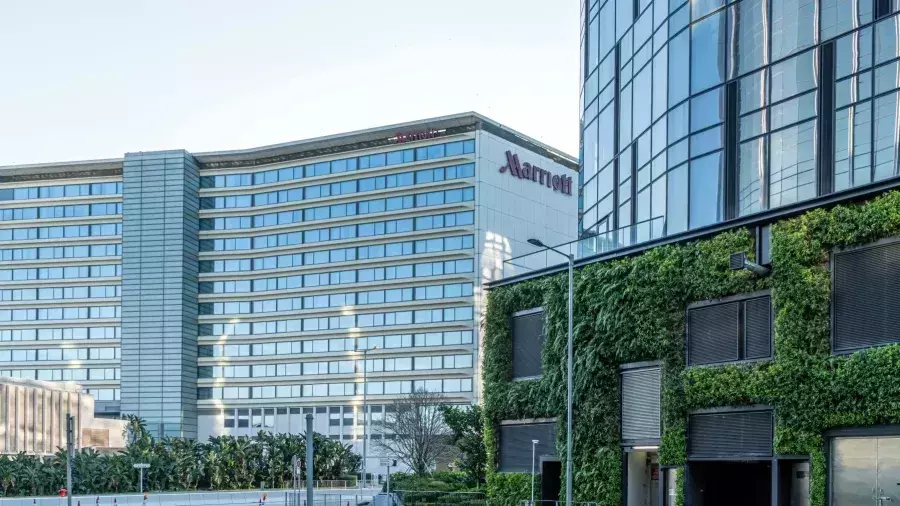
Hong Kong's hospitality sector is on a promising recovery trajectory, with total hotel spending anticipated to reach an impressive .5 billion by 2026. This substantial rebound is primarily attributed to the increasing influx of tourists from mainland China, significantly bolstering the local economy.
Hong Kong's Hospitality Sector Forecasts Strong Growth Amidst Evolving Market Dynamics
According to the latest Hong Kong Hotel Report, released in September 2026 by leading property consultancy Knight Frank, the projected expenditure for 2026 will mark approximately 90% of the peak spending observed in 2018. This indicates a vigorous resurgence in the market, largely propelled by escalating visitor volumes and the substantial financial contributions from mainland Chinese travelers. While the overall recovery paints a positive picture, an uneven pace is noted across different international markets. Notably, arrivals from Japan and South Korea continue to lag, standing at about 39% below their 2018 figures. Additionally, a detailed analysis of per-capita hotel spending in 2025 revealed a decline across most visitor segments, with the notable exceptions of mainland China and North America, where spending remained strong. A critical area for further improvement lies in business travel. The report highlights that business visitor arrivals during the first half of 2026 were still 43% lower than 2018 levels, indicating a significant potential for growth in this segment. Performance within the hotel industry has shown considerable variation by category. High-tariff-A hotels, catering to the luxury market, achieved a record-breaking revenue per available room (RevPAR) of ,883 in the first half of 2026, surpassing their 2018 achievements. Conversely, medium-tariff hotels experienced higher occupancy rates but simultaneously saw a decrease in room rates, resulting in the most significant drop in RevPAR amongst all hotel categories. Antonio Wu, the head of capital markets at Knight Frank, pointed out an emerging trend in the sector. The substantial increase in young professionals and international students in Hong Kong over the past four years has spurred interest in re-purposing certain hotel properties. This has led to a growing number of conversions of selected hotel assets into co-living spaces and student accommodation, presenting new investment opportunities. Wu emphasized that hotels classified as high-tariff-B and medium-tariff, typically featuring smaller unit sizes, fewer rooms, and ample communal amenities, are particularly well-suited for such conversions. The report further corroborates this trend, noting that student accommodation has become a prominent investment theme, with several hotel transactions in 2026 specifically designated for this transformative purpose.
The report from Knight Frank illuminates the dynamic landscape of Hong Kong's hotel industry. The strong recovery, largely driven by mainland Chinese demand, is a testament to the region's enduring appeal. However, the disparities in recovery across different visitor markets and the persistent gap in business travel underscore the need for targeted strategies to diversify and strengthen the sector. The growing trend of converting hotels into co-living and student accommodations also signals an innovative adaptation to evolving demographic and economic realities, suggesting a flexible and forward-thinking approach within the property market. This adaptability will be crucial for sustainable growth and resilience in the years to come.